The Essential Guide to Spanish Restaurant Menus (2026)
Picture yourself seated in a bustling Spanish restaurant, the air filled with delicious aromas and lively conversation. The menu arrives, brimming with tempting options, yet many terms seem unfamiliar. For those eager to explore authentic cuisine, understanding spanish restaurant menus is essential.
Spanish dining is gaining popularity around the world, but navigating traditional and modern menus can be a real challenge. This guide unlocks insider tips, cultural insights, and practical tools for anyone hoping to order confidently. Whether you are a diner or a restaurateur, use this resource to enhance every meal.
Inside, you will discover how spanish restaurant menus are structured, must-know terms, regional specialties, digital menu trends, and simple strategies for ordering like a local.
Understanding the Structure of Spanish Restaurant Menus
Navigating spanish restaurant menus can feel like opening a window into Spanish culture. From the first glance, you'll notice a unique organization and a blend of tradition and innovation that defines the dining experience.
Traditional Menu Sections Explained
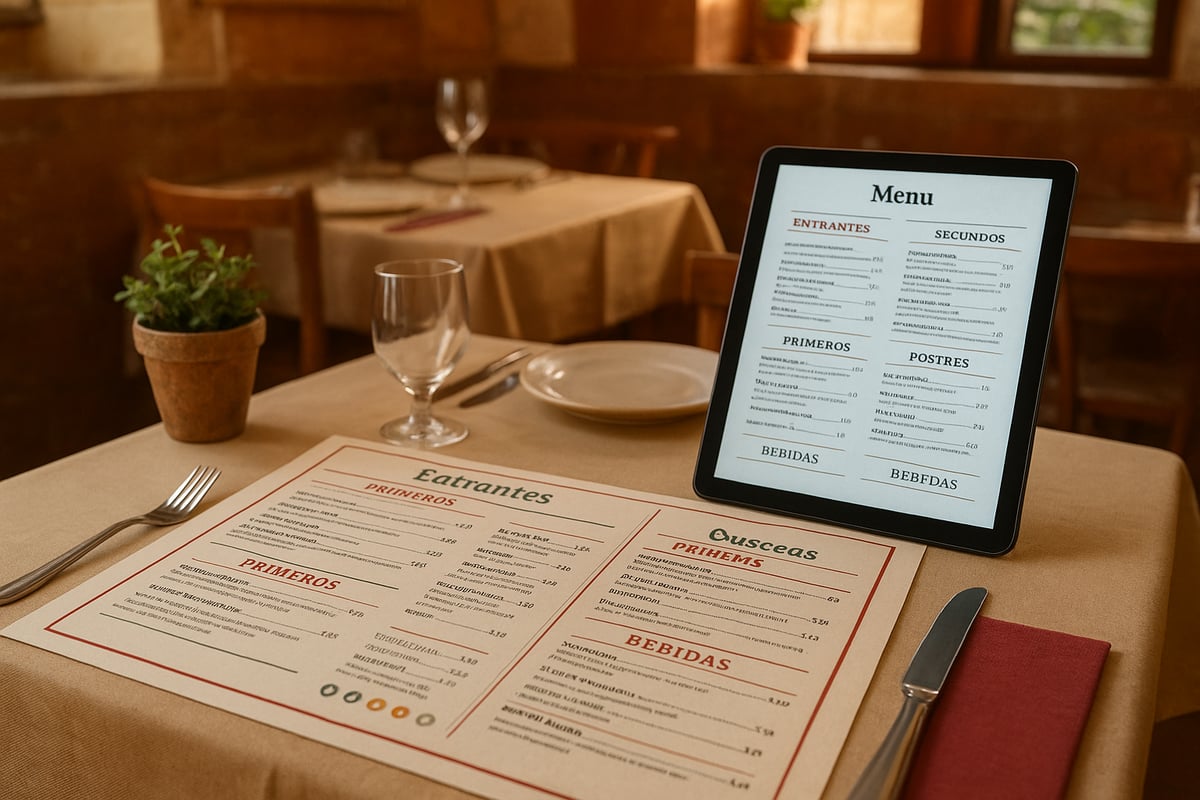
Most spanish restaurant menus follow a classic structure, guiding diners through a well-paced meal. Typical categories include:
| Section | Description | Example Dishes |
|---|---|---|
| Entrantes | Starters | Ensalada mixta, croquetas |
| Primeros | First courses | Sopa de ajo, paella |
| Segundos | Main courses | Solomillo, merluza a la plancha |
| Postres | Desserts | Flan, tarta de Santiago |
| Bebidas | Drinks | Vino, cerveza, agua |
A key distinction on spanish restaurant menus is between the Menú del Día (fixed-price daily menu) and the Carta (à la carte menu). The Menú del Día, common at lunchtime, offers a set selection of starter, main, dessert, drink, and bread for a single price. This tradition, explained in more detail here, provides both value and a taste of home-cooked Spanish fare. In contrast, the Carta gives diners full flexibility to choose individual dishes.
Seasonal and daily specials often appear as "Sugerencias del chef" or on blackboard menus near the entrance. These highlight local ingredients and chef’s creations, enriching spanish restaurant menus with variety and freshness.
Menu layouts can differ by city. In Madrid, menus emphasize hearty raciones for sharing, while Barcelona’s menus might feature lighter entrantes and Catalan touches. The structure reflects Spanish dining culture, encouraging shared plates and long, social meals.
Lunch menus are usually more extensive and affordable than dinner offerings. According to ElTenedor (2024), 67% of Spanish restaurants now provide both Menú del Día and à la carte options, blending tradition with modern demand. Many contemporary establishments also integrate tasting menus or fusion sections, showing how spanish restaurant menus are evolving.
Decoding Menu Terminology and Symbols
Understanding the language of spanish restaurant menus is essential for a smooth dining experience. Common abbreviations include:
- IVA incluido: Tax included in the price.
- Raciones: Large portions, meant for sharing.
- Tapas: Small plates, ideal for sampling.
Menus often display icons for dietary preferences, such as gluten-free, vegetarian, vegan, or nut-free dishes. This makes it easier to identify safe options at a glance.
Portion sizes are another area where clarity matters. You might see:
| Term | Meaning |
|---|---|
| Tapa | Small appetizer portion |
| Media ración | Half portion, larger than a tapa |
| Ración | Full portion, for sharing |
For example, a "media ración de jamón" is more substantial than a "tapa de jamón" and is perfect for sharing among two or three people.
Accurate interpretation of these terms and symbols prevents misunderstandings and ensures you get exactly what you expect from spanish restaurant menus. Modern digital menus increasingly include visual cues and multilingual support, making it even easier for guests to navigate options confidently.
Must-Know Spanish Menu Terms and Phrases
Navigating spanish restaurant menus becomes much easier when you recognize the most common terms and phrases. Whether you are scanning a handwritten chalkboard in Seville or a digital menu in Barcelona, knowing the right vocabulary can transform your dining experience. This section demystifies key words, phrases, and regional differences to help you order with confidence.
Essential Food and Drink Vocabulary
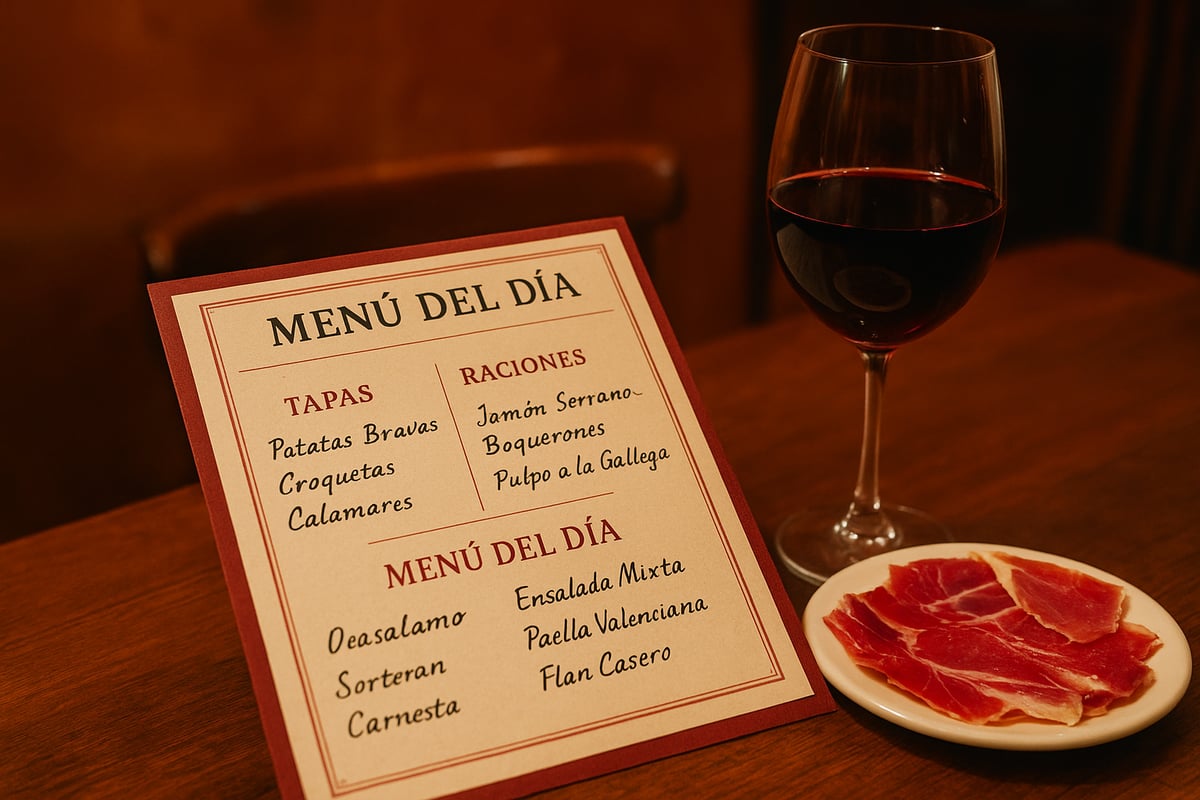
Understanding the language of spanish restaurant menus starts with a solid grasp of key food and drink terms. Here is a handy glossary to guide your dining choices:
| Spanish Term | English Meaning | Typical Use |
|---|---|---|
| Asado | Roasted | Meat, vegetables |
| A la plancha | Grilled (on a flat grill) | Fish, seafood |
| Guisado | Stewed | Meats, legumes |
| Frito | Fried | Fish, tapas |
| Pulpo a la gallega | Galician-style octopus | Regional specialty |
| Copa | Glass (of wine) | Drinks |
| Botella | Bottle (of wine) | Drinks |
| Caña | Small draft beer | Drinks |
| Vino de la casa | House wine | Drinks |
Many classic dishes on spanish restaurant menus are named for their region or preparation style. For example, "pulpo a la gallega" is a signature Galician octopus dish, thinly sliced and served over potatoes with paprika and olive oil.
When it comes to drinks, "caña" refers to a small draft beer, while "vino de la casa" means house wine, often a good value.
For a comprehensive vocabulary resource, consult the Spanish Dining and Restaurant Vocabulary guide to deepen your understanding of spanish restaurant menus.
Navigating Dietary Preferences and Restrictions
Spanish restaurant menus increasingly accommodate varied dietary needs. To communicate preferences or restrictions, these phrases are essential:
¿Tiene opciones vegetarianas?
¿Hay platos sin gluten?
Soy alérgico/a a los frutos secos.
Quisiera algo sin lactosa, por favor.
- "Vegetariano/a" denotes vegetarian, "vegano/a" for vegan.
- "Sin gluten" is gluten-free, "sin lactosa" is lactose-free.
- "Alérgico/a" means allergic; specify the ingredient.
According to Hostelería de España (2025), 29% of spanish restaurant menus now feature vegetarian or vegan sections. Look for icons indicating gluten-free (GF), vegetarian (V), vegan (VE), and nut-free options.
Being able to express your needs clearly on spanish restaurant menus ensures a safer, more enjoyable meal. Staff are typically understanding and happy to help with dietary requests.
Regional Dialects and Menu Variations
Regional diversity shapes spanish restaurant menus. Even fluent Spanish speakers notice differences in terminology from one region to another. Here are some examples:
- Basque Country: "Pintxos" (small bites, often skewered) instead of "tapas."
- Catalonia: Menus may list "Entrants" (starters) and "Plat principal" (main course) in Catalan.
- Andalusia: "Pescaíto frito" (fried fish) is a staple, and free tapas often accompany drinks.
- Galicia: "Empanada gallega" (savory pastry) and "lacón" (pork shoulder) are common.
A table of regional menu terms:
| Region | Small Plates Term | Language Used |
|---|---|---|
| Basque Country | Pintxos | Basque/Spanish |
| Andalusia | Tapas | Spanish |
| Catalonia | Tapas/Entrants | Catalan/Spanish |
| Galicia | Tapas | Galician/Spanish |
Regional menus can contain words unfamiliar even to seasoned travelers. Recognizing these differences on spanish restaurant menus helps you spot local specialties and avoid confusion. Always ask your server if you are unsure about a dish name or ingredient.
Regional Specialties and Signature Dishes Across Spain
Spain’s culinary landscape is as diverse as its geography. Exploring regional specialties is essential for anyone hoping to truly understand spanish restaurant menus. Each region’s traditions, ingredients, and history are reflected in the dishes and structures you’ll find on local menus.
North: Galicia, Basque Country, Asturias
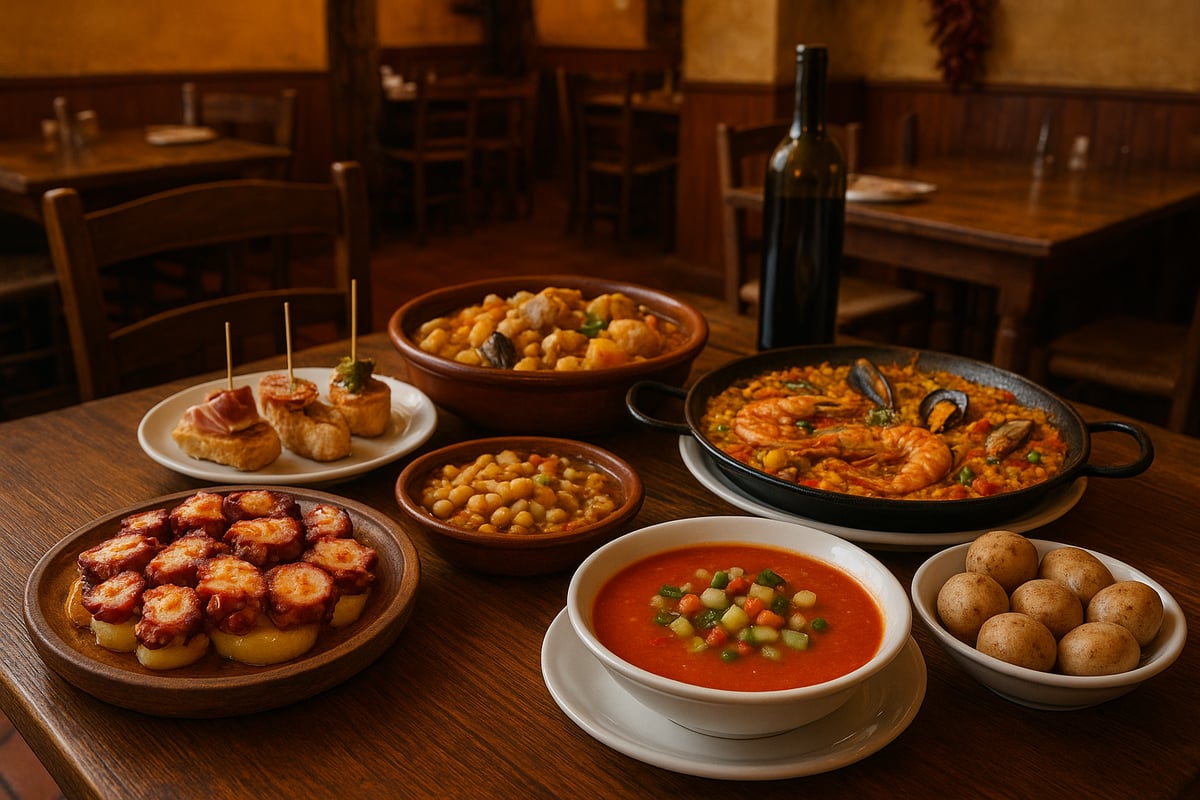
Northern Spain is famed for its seafood and robust stews, which often headline spanish restaurant menus in the region. In Galicia, “pulpo a la gallega” (octopus with paprika and olive oil) is a must-try. The Basque Country is celebrated for “bacalao al pil-pil” (salt cod in garlic and olive oil emulsion) and the iconic “pintxos,” which are small bites usually served on bread.
Asturias offers “fabada asturiana,” a rich bean stew with chorizo and morcilla. Unique beverages like “sidra” (cider) are also commonly listed. Menus from San Sebastián and Santiago de Compostela showcase an emphasis on sharing and seasonality, making northern spanish restaurant menus perfect for culinary explorers.
Central Spain: Madrid and Castilla-La Mancha
Central Spain’s culinary identity is rooted in hearty, comforting fare. Madrid’s “cocido madrileño,” a multi-course chickpea stew, is a staple of many spanish restaurant menus. “Callos” (tripe stew) and “cochinillo asado” (roast suckling pig) highlight the region’s love of slow-cooked dishes.
The tradition of “raciones,” larger shared plates, is central to Madrid’s dining culture. Manchego cheese, from Castilla-La Mancha, frequently appears in both starters and main courses. In traditional tabernas, menus are structured for groups, reinforcing the social aspect of spanish restaurant menus in this area.
East: Catalonia and Valencia
The eastern regions offer a vibrant mix of Mediterranean flavors and local language on spanish restaurant menus. In Catalonia, expect to see “escalivada” (roasted vegetables) and “crema catalana” (a caramelized custard dessert). Menus often use Catalan terms like “entrants” for starters.
Valencia is synonymous with “paella,” but also features “fideuà,” a noodle-based seafood dish. Authentic paella is usually listed as “paella valenciana” and prepared with local rice, rabbit, and green beans. The blend of regional dialects and specialties makes this area’s spanish restaurant menus particularly diverse and exciting.
South: Andalusia
Andalusia’s menus are a celebration of bold flavors and tapas culture. “Salmorejo” and “gazpacho” offer refreshing options, while “pescaíto frito” (fried fish) and “jamón ibérico” are menu staples. Granada’s tradition of serving free tapas with drinks is unique to the region.
Data from Andalucía Turismo (2025) shows that 80% of Andalusian restaurants feature at least 10 traditional tapas on their spanish restaurant menus. The variety and generosity found here make southern menus ideal for sampling a wide array of local dishes.
Canary and Balearic Islands
Island menus present a fusion of Spanish, African, and Mediterranean influences. In the Canary Islands, “papas arrugadas” (wrinkled potatoes) with “mojo picón” sauce are iconic. The Balearics boast “ensaimada,” a sweet pastry, and seafood-rich dishes.
Menus here often highlight local produce and imported spices. The integration of diverse culinary traditions ensures that spanish restaurant menus in the islands stand out for their creativity and freshness. For a comprehensive look at these regional differences, visit the Spanish Cuisine Overview.
| Region | Signature Dish | Unique Menu Feature |
|---|---|---|
| Galicia | Pulpo a la gallega | Emphasis on seafood |
| Basque Country | Pintxos, bacalao al pil-pil | Bar counters, variety |
| Madrid | Cocido madrileño, callos | Raciones for sharing |
| Catalonia | Escalivada, crema catalana | Catalan terms, paella |
| Andalusia | Salmorejo, pescaíto frito | Free tapas with drinks |
| Canary Islands | Papas arrugadas, mojo picón | Fusion influences |
| Balearics | Ensaimada, seafood dishes | Local pastries |
Understanding these regional distinctions is key to navigating spanish restaurant menus and making the most of every dining experience.
The Digital Evolution: Spanish Restaurant Menus in 2026
The landscape of Spanish restaurant menus is experiencing a digital transformation in 2026. Across Spain, traditional paper menus are being replaced by innovative digital formats that enhance both convenience and accessibility. Diners now expect real-time updates, visually engaging layouts, and instant translation options when exploring Spanish restaurant menus. For both locals and international visitors, this evolution means a more streamlined, informative, and enjoyable dining experience.
Rise of Digital and Multilingual Menus
Digital technology has revolutionized how Spanish restaurant menus are presented. By 2025, 74% of Spanish restaurants had already adopted digital menus, making them a standard feature in both urban and rural establishments. QR code menus and tablet-based ordering are now commonplace, allowing guests to access the latest menu offerings directly on their smartphones or devices.
One of the most significant benefits of digital menus for restaurants is the ability to update dishes, prices, and specials in real time. This flexibility ensures that diners always see accurate information, including seasonal items and chef's suggestions. Digital menus also support sustainability by reducing paper waste.
For international guests, digital Spanish restaurant menus often include built-in language options, making it easier to navigate and appreciate authentic cuisine. The rapid shift to digital formats reflects a broader commitment to innovation and customer satisfaction in Spanish dining culture.
AI-Powered Translation and Accessibility
As Spain welcomes millions of tourists each year, the need for accessible Spanish restaurant menus has never been greater. AI-powered translation tools are now embedded in many digital menus, delivering instant, accurate translations of dish names, ingredients, and preparation methods. For example, a complex item like "calamares en su tinta" is automatically rendered as "squid in its own ink" in multiple languages.
This technology helps break down language barriers and ensures that all guests can enjoy their meals with confidence. Multilingual digital menus are especially important for those with dietary restrictions or allergies, as they can quickly identify suitable options.
Platforms offering multilingual menu solutions enable restaurants to reach a broader audience, improve guest satisfaction, and reduce miscommunication. With these advancements, Spanish restaurant menus have become more inclusive, welcoming, and user-friendly for everyone.
Visual Menus and Enhanced Customer Engagement
Visual content is now central to the digital dining experience in Spain. High-quality images, dish galleries, and clear icons are standard features on modern Spanish restaurant menus. Research indicates that menus featuring vibrant photos can increase specific dish orders by up to 30 percent, as diners are more likely to try unfamiliar specialties when they can see what to expect.
Visual menus also display allergen information, portion sizes, and preparation details through intuitive symbols. This empowers guests to make informed choices and enhances overall satisfaction. For non-Spanish speakers, seeing the dish before ordering reduces hesitation and builds excitement about trying regional favorites.
The move toward visually engaging Spanish restaurant menus not only benefits diners but also provides restaurants with valuable feedback on popular items, helping them refine their offerings over time.
Carta: Powering Modern Spanish Menus
One of the leading platforms shaping the future of Spanish restaurant menus is Carta. This digital solution equips restaurants with tools for effortless menu management, multilingual support, and AI-powered translations. By integrating real-time updates and visual galleries, Carta helps establishments create menus that are both dynamic and appealing.
A Madrid eatery using Carta can present its menu in Spanish, English, French, and German, catering to a diverse clientele. Restaurateurs benefit from advanced analytics, tracking which dishes are most popular and adjusting their offerings accordingly.
Carta aligns with the growing demand for accessible and visually engaging Spanish restaurant menus in 2026. With easy-to-use features and robust support, it empowers restaurants to deliver exceptional dining experiences to locals and tourists alike.
Insider Tips for Ordering Like a Local
Navigating spanish restaurant menus with confidence means embracing a few local customs and strategies. Knowing how to order like a native can transform your dining experience, making each meal both memorable and authentic.
Understanding Spanish Dining Etiquette
Spanish dining is as much about the experience as the food. Meals are unhurried, with locals savoring every bite and conversation. Expect to spend time enjoying your meal, especially at lunch.
It is common to ask for recommendations with “¿Qué recomienda?” Servers appreciate when guests show interest in local specialties. Tipping is modest, usually rounding up the bill or leaving small change. Payment is often requested at the end by asking for “la cuenta, por favor.”
Approaching spanish restaurant menus with patience and curiosity ensures you soak in the true spirit of Spanish hospitality.
Making the Most of the Menu del Día
The Menú del Día is a staple of spanish restaurant menus, offering excellent value, especially at lunchtime. Typically, this fixed-price menu features a starter, main dish, dessert, drink, and bread, all for a set price.
Look for chalkboards or printed inserts highlighting the day’s specials. Comparing Menú del Día options in cities like Madrid and Seville reveals regional dishes and seasonal ingredients. Choosing this menu is a smart way to sample a variety of local flavors without overspending.
Understanding the structure of spanish restaurant menus helps you spot the best deals and enjoy a full, balanced meal.
Avoiding Common Pitfalls and Misunderstandings
Even seasoned travelers can stumble when reading spanish restaurant menus. Portion sizes can be confusing, with terms like “tapa,” “media ración,” and “ración” indicating different amounts.
Some items, such as bread or water, may incur extra charges unless included in the menu. Always check for notes about service fees at the bottom of the menu.
A little menu knowledge helps you avoid surprises and ensures you order exactly what you want from spanish restaurant menus.
Leveraging Technology and Staff Expertise
Modern dining in Spain often blends tradition with technology. Many restaurants now offer digital menus, often accessed via QR codes. Exploring QR code menu features allows guests to view updated offerings, allergen details, and even translations on their phones.
Do not hesitate to ask staff for explanations or suggestions if a dish on spanish restaurant menus is unfamiliar. Most servers are eager to help, making your experience smoother and more enjoyable. Combining digital tools with personal interaction ensures you dine like a local, even as menus evolve.